> For the complete documentation index, see [llms.txt](https://book.oiox.cn/llms.txt). Markdown versions of documentation pages are available by appending `.md` to page URLs; this page is available as [Markdown](https://book.oiox.cn/linux/da-jian-dhcp-fu-wu-shi-xian-zi-dong-fen-pei-di-zhi.md).
# 搭建DHCP服务,实现自动分配地址
```mermaid
erDiagram
CUSTOMER ||--o{ ORDER : places
ORDER ||--|{ LINE-ITEM : contains
CUSTOMER }|..|{ DELIVERY-ADDRESS : uses
```
## **DHCP实现原理**
## **DHCP定义**
**DHCP**(Dynamic Host Configuration Protocol,动态主机配置协议)是一个局域网的网络协议,使用UDP协议工作。它是一种流行的Client/Server协议,一般用于为主机或者为路由器等指定相关的配置信息。DHCP服务在企业和家庭中得到了大量的应用,它能够自动分配ip地址以及一些其他的相关信息,整个过程对客户透明。
## **DHCP分配方式**
**自动分配方式**(Automatic Allocation),DHCP服务器为主机指定一个永久性的IP地址,一旦DHCP客户端第一次成功从DHCP服务器端租用到IP地址后,就可以永久性的使用该地址。
**动态分配方式**(Dynamic Allocation),DHCP服务器给主机指定一个具有时间限制的IP地址,时间到期或主机明确表示放弃该地址时,该地址可以被其他主机使用。
**手工分配方式**(Manual Allocation),客户端的IP地址是由网络管理员指定的,DHCP服务器只是将指定的IP地址告诉客户端主机。
## **DHCP工作过程**
DHCP客户机在启动时,会搜寻网络中是否存在DHCP服务器。如果找到,则给DHCP服务器发送一个请求。DHCP服务器接到请求后,为DHCP客户机选择TCP/IP配置的参数,并把这些参数发送给客户端。如果已配置冲突检测设置,则DHCP服务器在将租约中的地址提供给客户机之前会使用Ping测试作用域中每个可用地址的连通性。这可确保提供给客户的每个IP地址都没有被使用手动TCP/IP配置的另一台非DHCP计算机使用。
根据客户端是否第一次登录网络,DHCP的工作形式会有所不同。
## **初次登录**
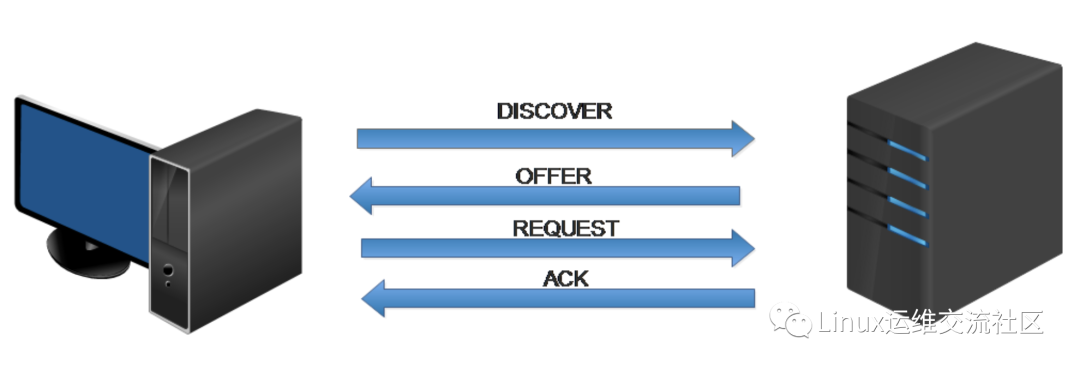
初次登录时DHCP工作包括四个步骤
### **1、寻找DHCP服务器**
当DHCP客户端第一次登录网络的时候,计算机发现本机上没有任何IP地址设定,将以广播方式发送DHCP discover发现信息来寻找DHCP服务器,即向255.255.255.255发送特定的广播信息。网络上每一台安装了TCP/IP协议的主机都会接收这个广播信息,但只有DHCP服务器才会做出响应。
### **2、分配IP地址**
在网络中接收到DHCP discover发现信息的DHCP服务器就会做出响应,它从尚未分配的IP地址池中挑选一个分配给DHCP客户机,并向DHCP客户机发送一个包含分配的IP地址和其他设置的DHCP offer提供信息。
### **3、接受IP地址**
DHCP客户端接受到DHCP offer提供信息之后,选择第一个接收到的提供信息,然后以广播的方式回答一个DHCP request请求信息,该信息包含向它所选定的DHCP服务器请求IP地址的内容。
### **4、IP地址分配确认**
当DHCP服务器收到DHCP客户端回答的DHCP request请求信息之后,便向DHCP客户端发送一个包含它所提供的IP地址和其他设置的DHCP ack确认信息,告诉DHCP客户端可以使用它提供的IP地址。然后,DHCP客户机便将其TCP/IP协议与网卡绑定,另外,除了DHCP客户机选中的DHCP服务器外,其他的DHCP服务器将收回曾经提供的IP地址。
## **重新登录**
以后DHCP客户端每次重新登录网络时,就不需要再发送DHCP discover发现信息了,而是直接发送包含前一次所分配的IP地址的DHCP request请求信息。当DHCP服务器收到这一信息后,它会尝试让DHCP客户机继续使用原来的IP地址,并回答一个DHCP ack确认信息。如果此IP地址已无法再分配给原来的DHCP客户机使用时,则DHCP服务器给DHCP客户机回答一个DHCP nack否认信息。当原来的DHCP客户机收到此DHCP nack否认信息后,它就必须重新发送DHCP discover发现信息来请求新的IP地址。

1、如果客户端DHCP request 内的IP地址在服务器端没有被使用,DHCP服务器回复DHCP ACK继续使用IP。
2、如果客户端DHCP request 内的IP地址在服务器端已被使用,DHCP服务器回复DHCP NACK告诉客户端IP已被使用。
3、回复NACK后,重新开始DHCP初次登录时的流程
## **更新租约**
DHCP服务器向DHCP客户机出租的IP地址一般都有一个租借期限,期满后DHCP服务器便会收回出租的IP地址。如果DHCP客户机要延长其IP租约,则必须更新其IP租约。DHCP客户机启动时和IP租约期限到达租约的50%时,DHCP客户机都会自动向DHCP服务器发送更新其IP租约的信息。
## **在CentOS7上安装DHCP软件包**
```
[root@jhr-hub ~]# yum -y install dhcp
[root@jhr-hub ~]# cat /etc/dhcp/dhcpd
dhcpd6.conf dhcpd.conf
[root@jhr-hub ~]# cat /etc/dhcp/dhcpd.conf
#
# DHCP Server Configuration file.
# see /usr/share/doc/dhcp*/dhcpd.conf.example
# see dhcpd.conf(5) man page
#
[root@jhr-hub ~]#
[root@jhr-hub ~]# cp /usr/share/doc/dhcp-4.2.5/dhcpd.conf.example /etc/dhcp/dhcpd.conf
cp: overwrite ‘/etc/dhcp/dhcpd.conf’? y
[root@jhr-hub ~]#
```
## **修改DHCP的配置文件**
```
[root@jhr-hub ~]# vim /etc/dhcp/dhcpd.conf
[root@jhr-hub ~]#
[root@jhr-hub ~]#
[root@jhr-hub ~]#
[root@jhr-hub ~]# cat /etc/dhcp/dhcpd.conf
# dhcpd.conf
#
# Sample configuration file for ISC dhcpd
#
# option definitions common to all supported networks...
option domain-name "example.org";
option domain-name-servers 3.7.191.1;
#设置当前的IP地址有效期,单位s
default-lease-time 60;
#设置申请最大有效期
max-lease-time 60;
# Use this to enble / disable dynamic dns updates globally.
#ddns-update-style none;
# If this DHCP server is the official DHCP server for the local
# network, the authoritative directive should be uncommented.
#authoritative;
# Use this to send dhcp log messages to a different log file (you also
# have to hack syslog.conf to complete the redirection).
log-facility local7;
# No service will be given on this subnet, but declaring it helps the
# DHCP server to understand the network topology.
#声明IP地址段和子网掩码
subnet 192.168.1.0 netmask 255.255.255.0 {
#地址池:设置一个地址段
range 192.168.1.100 192.168.1.200;
#指定网关
option routers 3.7.191.1;
#获取DNS
option domain-name-servers 192.168.1.1;
}
# This is a very basic subnet declaration.
subnet 10.254.239.0 netmask 255.255.255.224 {
range 10.254.239.10 10.254.239.20;
option routers rtr-239-0-1.example.org, rtr-239-0-2.example.org;
}
# This declaration allows BOOTP clients to get dynamic addresses,
# which we don't really recommend.
subnet 10.254.239.32 netmask 255.255.255.224 {
range dynamic-bootp 10.254.239.40 10.254.239.60;
option broadcast-address 10.254.239.31;
option routers rtr-239-32-1.example.org;
}
# A slightly different configuration for an internal subnet.
subnet 10.5.5.0 netmask 255.255.255.224 {
range 10.5.5.26 10.5.5.30;
option domain-name-servers ns1.internal.example.org;
option domain-name "internal.example.org";
option routers 10.5.5.1;
option broadcast-address 10.5.5.31;
default-lease-time 600;
max-lease-time 7200;
}
# Hosts which require special configuration options can be listed in
# host statements. If no address is specified, the address will be
# allocated dynamically (if possible), but the host-specific information
# will still come from the host declaration.
host passacaglia {
hardware ethernet 0:0:c0:5d:bd:95;
filename "vmunix.passacaglia";
server-name "toccata.fugue.com";
}
# Fixed IP addresses can also be specified for hosts. These addresses
# should not also be listed as being available for dynamic assignment.
# Hosts for which fixed IP addresses have been specified can boot using
# BOOTP or DHCP. Hosts for which no fixed address is specified can only
# be booted with DHCP, unless there is an address range on the subnet
# to which a BOOTP client is connected which has the dynamic-bootp flag
# set.
host fantasia {
hardware ethernet 08:00:07:26:c0:a5;
fixed-address fantasia.fugue.com;
}
# You can declare a class of clients and then do address allocation
# based on that. The example below shows a case where all clients
# in a certain class get addresses on the 10.17.224/24 subnet, and all
# other clients get addresses on the 10.0.29/24 subnet.
class "foo" {
match if substring (option vendor-class-identifier, 0, 4) = "SUNW";
}
shared-network 224-29 {
subnet 10.17.224.0 netmask 255.255.255.0 {
option routers rtr-224.example.org;
}
subnet 10.0.29.0 netmask 255.255.255.0 {
option routers rtr-29.example.org;
}
pool {
allow members of "foo";
range 10.17.224.10 10.17.224.250;
}
pool {
deny members of "foo";
range 10.0.29.10 10.0.29.230;
}
}
[root@jhr-hub ~]#
```
## **启动服务**
```
[root@jhr-hub ~]# systemctl start dhcpd
[root@jhr-hub ~]# systemctl status dhcpd
● dhcpd.service - DHCPv4 Server Daemon
Loaded: loaded (/usr/lib/systemd/system/dhcpd.service; disabled; vendor preset: disabled)
Active: active (running) since Thu 2021-12-09 11:25:37 CST; 2s ago
Docs: man:dhcpd(8)
man:dhcpd.conf(5)
Main PID: 142669 (dhcpd)
Status: "Dispatching packets..."
Memory: 5.0M
CGroup: /system.slice/dhcpd.service
└─142669 /usr/sbin/dhcpd -f -cf /etc/dhcp/dhcpd.conf -user dhcpd -group dhcpd --no-pid
```
> **关于**
>
>
>
>
>
> **CSDN、GitHub、51CTO、知乎、开源中国、思否、掘金、简书、华为云、阿里云、腾讯云、哔哩哔哩、今日头条、新浪微博、个人博客**
>
> **全网可搜《小陈运维》**
>
> **文章主要发布于微信公众号**